
Self Introduction in English: Tips, Structure & Best Examples for Students
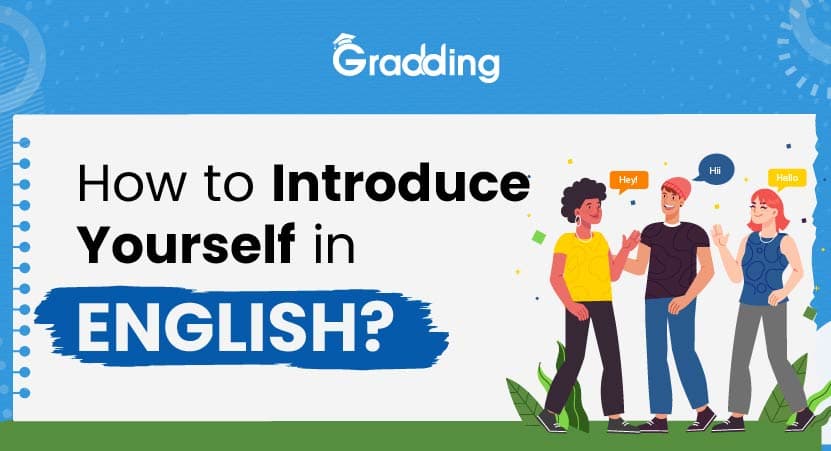
The self-introduction is the first impression and the most powerful tool you have, as it can shape the tone and direction of every interaction that follows. Whether you're meeting someone for the first time at a job interview, networking event, or even in a casual social setting, how you introduce yourself can leave a lasting impact. A self introduction in English is not just saying your name, rather it is showing confidence and reflecting your personality in just a few seconds. Read on to explore, its meaning, how to draft it, samples, tips and more to ensure an ideal self introduction.

Summarise with AI
Choose your AI Assist



Table of Contents

1. What is a 1-minute Introduction?
2. How Will I Start My Introduction?
3. How Do I Introduce Myself in English?
4. What Is a Formal Introduction?
5. How Long Should a Self-Introduction be?
6. Can I Use Humour in My Self-Introduction?
7. How Do I Introduce Myself Confidently in Front of a Group?
8. How Can I Make a Self-Introduction in a Virtual Setting?
What is a Self-Introduction?
Self introduction is a simple act of introducing yourself to others. In another words, it is a brief statement that usually begins a conversation. Moreover, it is an opportunity to present yourself in front of others in a way you want to. This typically includes your name, a bit of personal background, along with your occupation.
Besides, when you introduce yourself in English, you provide more insights into your personality, identity and other essential things in a simple, clean and crisp manner. Furthermore, do you know the self-intro also follows a structure? If not, read the upcoming segment to get along with it.
Key Reasons Why a Good Self-Introduction Matters:
- First Impressions: People often form opinions about you based on how you introduce yourself.
- Confidence: A clear and structured introduction shows that you're confident and comfortable in social situations.
- Connection: It helps build rapport with others and can lead to better personal or professional relationships.
- Clear Communication: A good self-introduction showcases your communication skills, especially in English.
Basic Structure of Self-Introduction
No two interviews or settings are the same or even similar. This is why you need to know how to alter your self introduction in English to justify the need. A well-structured self-introduction does more than just provide basic details about you. It serves as a gateway for deeper connections, whether it's with a new colleague, a potential employer, or new friends. An effective introduction creates a positive first impression, makes you seem approachable, and ensures you stand out in a meaningful way. When you have a clear structure in mind, you are also able to communicate more confidently and avoid awkward silences or rambling. To ensure that your introduction is clear, concise, and effective, there are several key components that should be included. Here’s a breakdown of the essential elements:
1. Greeting
Beginning the introduction of yourself with a greeting and a smile on your face leaves a positive impression. This is how you can do it in different settings:
- Formal: Good morning/afternoon/evening, everyone.
- Informal: Hi everyone, how's it going?
- Casual: Hey there, what's up?
- Polite: It's a pleasure to meet you all.
- Friendly: Nice to meet you!
2. Name
Although, as per a popular saying, "what is in the name", telling your name is needless. But while you give yourself introduction in English, this plays a vital role as this will be the identity with which everyone will be addressing you. So, this is how you can tell your name:
- Simple: My name is [Your Name].
- Full Name: My full name is [Your Full Name].
- Nickname: You can call me [Your Nickname].
- Professional: I go by [Your Professional Name].
- Formal: I am [Your Full Name].
3. Your Profession/Occupation
After the name, next comes your profession, while you introduce yourself in English. Moreover, this is crucial in job interviews or professional settings. Thus, here are several ways in which you can do this:
- Specific: I am a software engineer at [Company Name].
- General: I work as a [Job Title].
- Student: I am a [Year] year student at [University Name].
- Freelancer: I am a freelance [Skill/Profession].
- Retired: I am a retired [Previous Profession].
4. Where You Are From
Telling about where you live or where you are from is the next thing you should do while you provide "My introduction in English". Therefore, here are a few approaches to do the same:
- Country: I am from [Country Name].
- City: I am originally from [City Name].
- State/Province: I am from the state of [State Name].
- Region: I hail from the [Region Name] region.
- Neighborhood: I grew up in the [Neighborhood Name] Neighborhood.
5. Your Interest or Hobbies
Telling about what you are interested in, like your hobbies and favourite pastime activities, will add a personal touch to the self-intro. Besides, it also helps the interviewer connect with you better. Here's how you can do it:
- Simple: I enjoy [Hobby 1] and [Hobby 2].
- Detailed: I'm passionate about [Interest 1] and love spending time on [Hobby 2].
- Unique: My hobbies include [Unusual Hobby 1] and [Unusual Hobby 2].
- Professional: In my free time, I like to [Professional Interest 1] and [Professional Interest 2].
- Social: I love spending time with friends and family, and I'm also interested in [Interest].
6. Why You Are Here (Optional, Context-Specific)
Adding the information about the reason behind you doing this is an option. To do this, you can:
- Event: I'm here today to [Reason for Attending].
- Meeting: I'm excited to be here to discuss [Topic of Discussion].
- Class: I'm looking forward to learning more about [Subject].
- Job Interview: I'm interested in the [Job Title] position and eager to contribute to your team.
- Networking Event: I'm hoping to connect with people in the [Industry] field.
7. Closing (Optional)
- Formal: Thank you for your time.
- Informal: Thanks for listening.
- Friendly: Nice meeting you!
- Professional: I look forward to hearing from you soon.
- Casual: See you around!
This structure can be adjusted depending on the formality of the situation. However, the above listed one is a basic framework to keep in mind.
Body Language While Introducing Yourself
When giving a self-introduction, body language is important in how your message is received. Here are some tips to ensure your body language supports a confident and positive self-introduction:
- Posture: Stand or sit up straight with your shoulders back. This conveys confidence and openness. Avoid slouching or crossing your arms, as these can appear defensive or disengaged.
- Eye Contact: Maintain natural eye contact. This shows you're engaged and confident. However, don't stare—balance it out by looking around occasionally to avoid making the other person feel uncomfortable.
- Smile: A warm smile creates a welcoming atmosphere and makes you seem approachable. It's a non-verbal way to convey friendliness.
- Gestures: Use open-handed gestures to accompany your words. This can help emphasize points and make your introduction more engaging. Avoid over-gesturing, as it might seem too intense.
- Movement: When standing, avoid fidgeting or shifting too much. Standing still (but not stiffly) creates a calm, composed presence. If you're sitting, keep your movements relaxed.
- The tone of Voice: While it's not technically body language, your tone complements your non-verbal cues. Speak clearly and at a volume that allows you to be heard, and modulate your tone to show enthusiasm.
- Mirroring: Subtly mirroring the other person's body language can create a connection and make the interaction feel more natural.
- Handshake or Greeting: In some cultures, a handshake or other physical greeting is appropriate. Offer a firm (but not too strong) handshake and make eye contact while doing so. If a handshake isn’t common in the context, a simple verbal greeting with a slight nod can work.
Overall, body language should be natural and match the tone of the situation—whether it's formal or casual. We have provided the template of self-introduction in the upcoming segment that help you to know how to answer in different settings.
Samples of Self Introduction
Knowing how to introduce yourself in different contexts is essential for making a good impression. Each situation may require a slightly different approach, whether you're meeting new people socially, attending a job interview, introducing yourself in a professional setting, or appearing for language proficiency tests. The key to an effective self-introduction is tailoring the content to match the environment and the audience. By practising self-introductions for various scenarios, you can feel more confident and prepared to engage with people in different situations. Below are some examples to illustrate how you can craft an introduction that suits your surroundings.
1. Self Introduction for a Job Interview in English - Template
A self-introduction in a job interview plays a crucial role as it is your first impression on the basis of which the interviewer can judge you. Thus, this needs to be the ideal one. Here is a template of self introduction for a fresher and for an experienced personal.
1.1 Fresher
A self-introduction for a job interview as a fresher should focus on your educational background, relevant skills, enthusiasm, and motivation to learn and contribute to the company. Here's an example of how you can introduce yourself:
Sample 1: Focusing on Academics with Enthusias
Sample 2: Focusing on Soft Skills and Adaptability
1.2 Experienced
For an experienced professional, your self-introduction should focus on your work experience, key skills, accomplishments, and how you can add value to the organization you're interviewing with. Here’s an example:
Sample 1: Focusing on Experience and Achievements
Sample 2: Emphasis on Adaptability and Continuous Learning
2. Self Introduction for Students in English - Template
Introducing yourself as a student can be tricky if you do not focus on the minute details. A self-introduction for students in English should be straightforward and engaging. Here’s a simple structure you can follow to create your introduction:
3. Self Introduction for Formal Meetings in English - Template
In formal meetings, a self-introduction should be professional, clear, and concise, focusing on your role, background, and how you contribute to the meeting's objectives. Here's an example of how you can introduce yourself:
4. Self Introduction for Language Proficiency Tests in English - Template
A self-introduction for a language proficiency test should be clear, concise, and structured. Here's an example of how you can introduce yourself:
These were the examples of self introduction in various settings that will help you perceive the way you can present yourself in front of others. However, even after knowing the structure and samples, you might loose confidence as this needs a face to face interaction. So we have got you covered as using the tactics enlisted can help you become assertive.
Tips for a Confident Self-Introduction
It is always said that smart work is better than hard work. This is why, here, we have listed some effective tactics to help you ease the process of "my introduction in English" leaving a strong impression.
- Maintain Eye Contact: Keeping eye contact with the listener shows that you are confident and engaged. But you must know the difference between eye contact and staring.
- Keep It Short: While giving an "introduction about myself", you must ensure not to add extra information. Rather, stick to the key pointers and be concise.
- Have a Good Posture: Body language speaks louder than words. Thus, you need to improve your posture and use good gestures.
- Avoid Memorising Lines: It is advised to practice answering "my introduction in English" but do not memorise anything as it can sound built up rather than natural.
- Use Strong Vocabulary: Using daily use words in English along with the synonyms makes you sound prepared and leaves a strong impression.
- Reduce Using Filler Words: Avoid using words such as 'um,' 'ah,' or 'like.' These can make you seem under-confident and can distract the listener from your message.
- Practice Challenging Words: Practicing challenging words can help you enhance your pronouncing skills. Thus, including tongue twisters, difficult words and more can be effective.
Conclusion
Self-introduction in English can be an awkward moment if you do not prepare well in advance. Thus, you must not get caught under-prepared, as this is the time you can impress the interviewer. Moreover, this is a crucial part of the language proficiency tests that will be the gateway to your study abroad journey. This is why you need to prepare well for the introduction for IELTS speaking or other such exams and make a strong first impression to crack the test on your first attempt. If you are still facing any issues, we have got you covered. You can opt for our English language learning course, which will help you speak and understand the English language confidently.
FAQs
1. What is a 1-minute Introduction?
A 1-minute introduction is a brief and concise way to introduce yourself, typically lasting about 60 seconds. It’s an opportunity to highlight key points about who you are, what you do, and any other relevant information, such as your interests or background. It’s often used in professional settings like networking events or job interviews. For example:
"Hi, my name is Sarah. I’m from Chicago and work as a marketing manager at ABC Corp. I help develop digital marketing strategies for our clients, focusing on social media and content creation. In my free time, I love hiking and photography, which helps me stay creative. I’m looking forward to connecting with everyone here today."
2. How Will I Start My Introduction?
To start your introduction, begin with a friendly greeting and your name. For example, you can say, "Hi, I’m [Your Name]" or "Hello, my name is [Your Name]." In a professional setting, you might say, "Good morning, I’m [Your Name], [Your Job Title] at [Company Name]." Keep it simple and clear, and then you can add a bit more about what you do or your interests if needed.
3. How Do I Introduce Myself in English?
When introducing yourself in English, you can keep it simple and clear. For example, in a casual setting, you might say, “Hi, I’m [Your Name]. Nice to meet you!” In a formal situation, try something like, “Good morning, my name is [Your Name]. It’s a pleasure to meet you.” You can also include more details about yourself, such as your job or where you're from, like, “I’m [Your Name], and I work as a [Job Title] at [Company Name].
4. What Is a Formal Introduction?
A formal introduction is a serious and correct speech along with body language used in professional settings. It can also refer to the opening part of a conversation that leads up to the main part. Moreover, to make it impressive, you can use several difficult wordsfrom English to showcase your vocabulary as well.
5. How Long Should a Self-Introduction be?
Ideally, "my self introduction in English” must be between 30 seconds to 2 minutes. However, this depends on the setting and the purpose.
6. Can I Use Humour in My Self-Introduction?
Yes, using humor in your self introduction can be a great way to engage your audience. It can help you break the ice and represent you as a person. However, you must be mindful of the context and the audience you're addressing.
7. How Do I Introduce Myself Confidently in Front of a Group?
To give an "introduction about myself", you can use the tips enlisted:
- Prepare well in advance
- Be concise
- Do not memorise lines
- Dress formally
- Make eye contact
8. How Can I Make a Self-Introduction in a Virtual Setting?
Making a self-introduction in a virtual setting involves presenting yourself clearly and confidently, while considering the online environment. Here are some tips for the same:
- Be clear and concise
- Engage with enthusiasm
- Ensure clear audio
- Share relevant information
- End on a friendly note
0 comments


Hand Picked Courses
Get Scholarship Assistance
Get Offer in 15 Days*
Finance/Loan Assistance
I want FREE assistance with

Improve your English faster with expert online coaching
Learn English